Light Pollution In Our Dark Skies

Is Light Pollution a Deal Breaker for Wide-Field Astrophotography?

For some photographers, the answer is an unequivocal yes. For others, myself included, the question is far more nuanced than that.
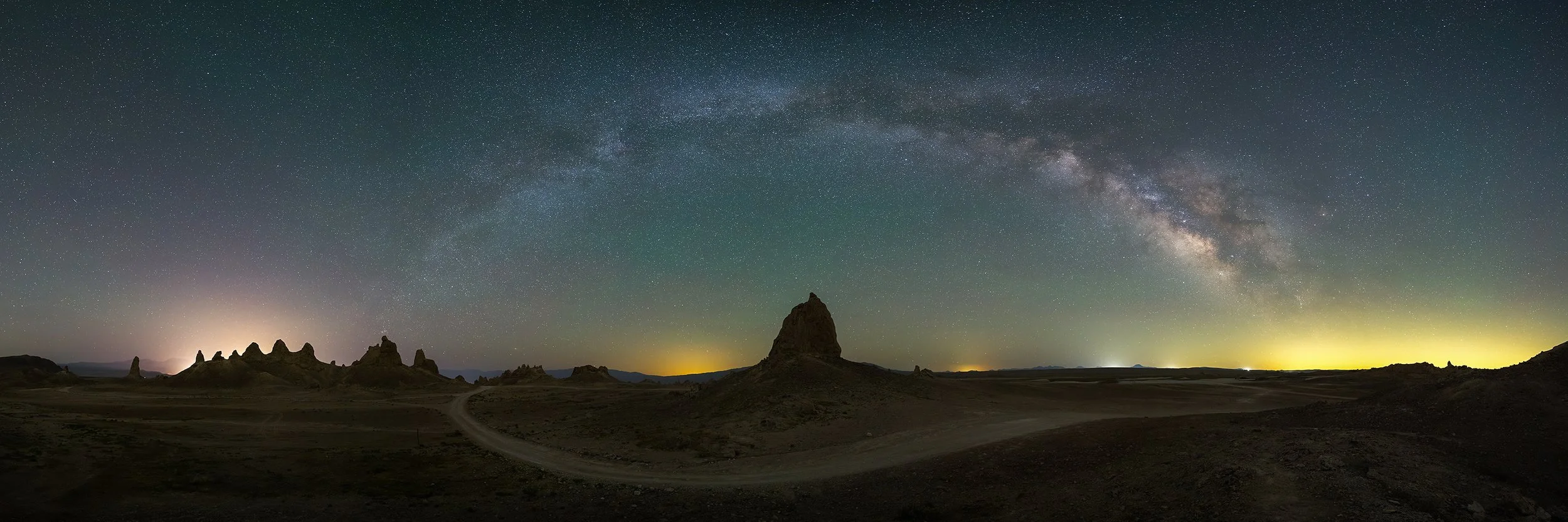
The Milky Way arching over Trona Pinnacles as city lights from Los Angeles, Las Vegas, Barstow, and nearby mining operations illuminate the horizon.

Recently, I overheard a fellow photographer say they had given up on night sky photography entirely, defeated by a combination of worsening light pollution and the ever-growing proliferation of satellites now streaking across the night sky. I understood the frustration immediately, and I won't pretend those aren't real things. But I'd be lying if I said my heart didn't sink a little hearing it. The night sky still has an enormous amount to offer to the willing photographer. The images are still out there, waiting to be made. All it takes is a willingness to look past imperfect conditions, a trained eye for what's possible within them, and the resolve to actually get out and make the time. That, in the end, is what separates the photographers who keep shooting from the ones who stop.
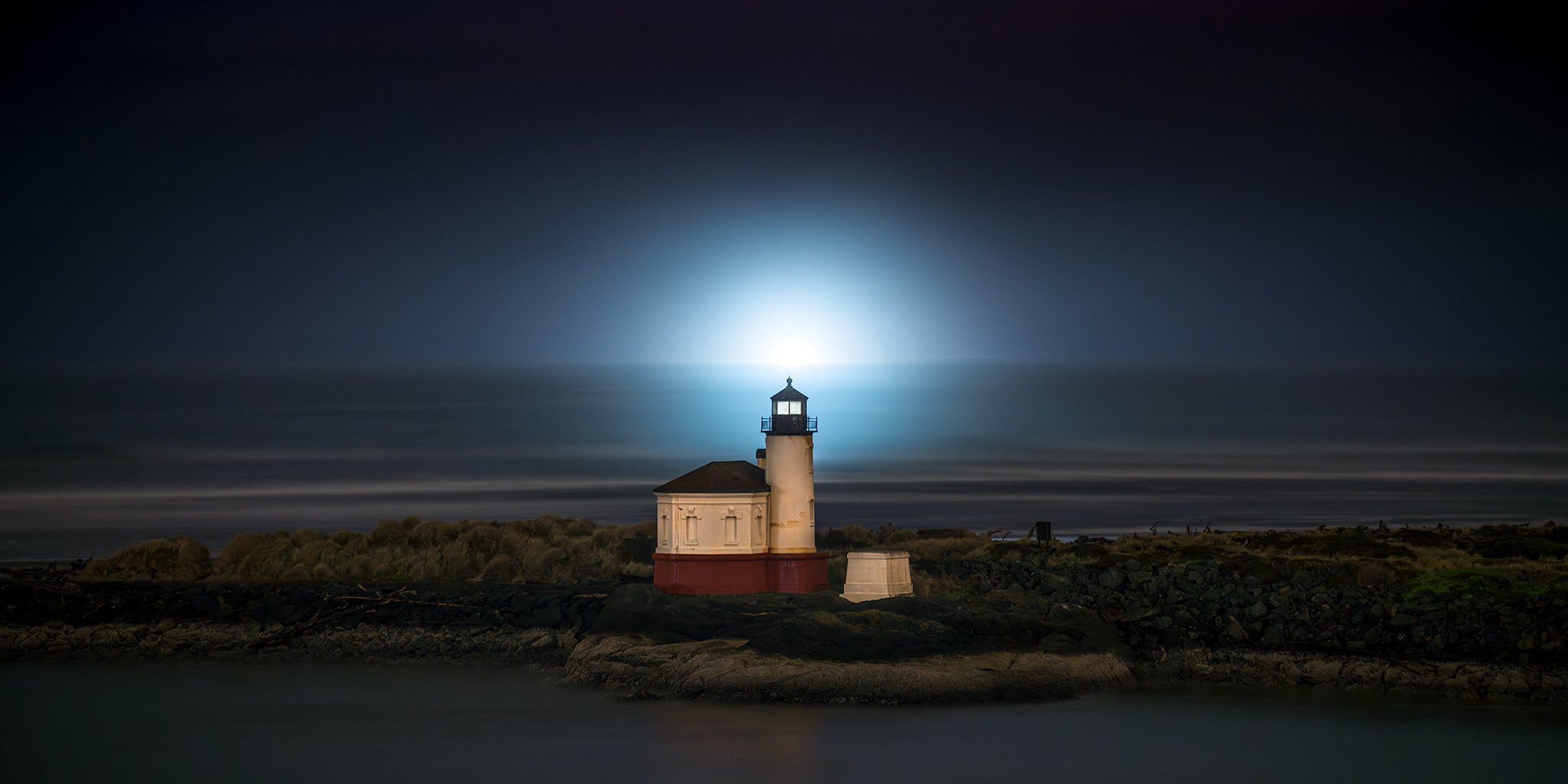
The Coquille River Lighthouse as a distant fishing vessel passes behind. The front illumination is entirely ambient light from the town of Bandon across the river.

This piece is accompanied by a selection of nighttime and wide-field astrophotography images I've captured over the years, each one made under skies affected, to some degree, by light pollution. I want to be upfront about this: I'm not here to celebrate or excuse senseless artificial light blazing into the night sky. What I am here to do is challenge the perfectionist in you, the photographer who has talked themselves out of heading outside because the conditions weren't ideal. Because the truth is, you never really know what an image will look like until you capture it. And sometimes, against all expectation, it just works.
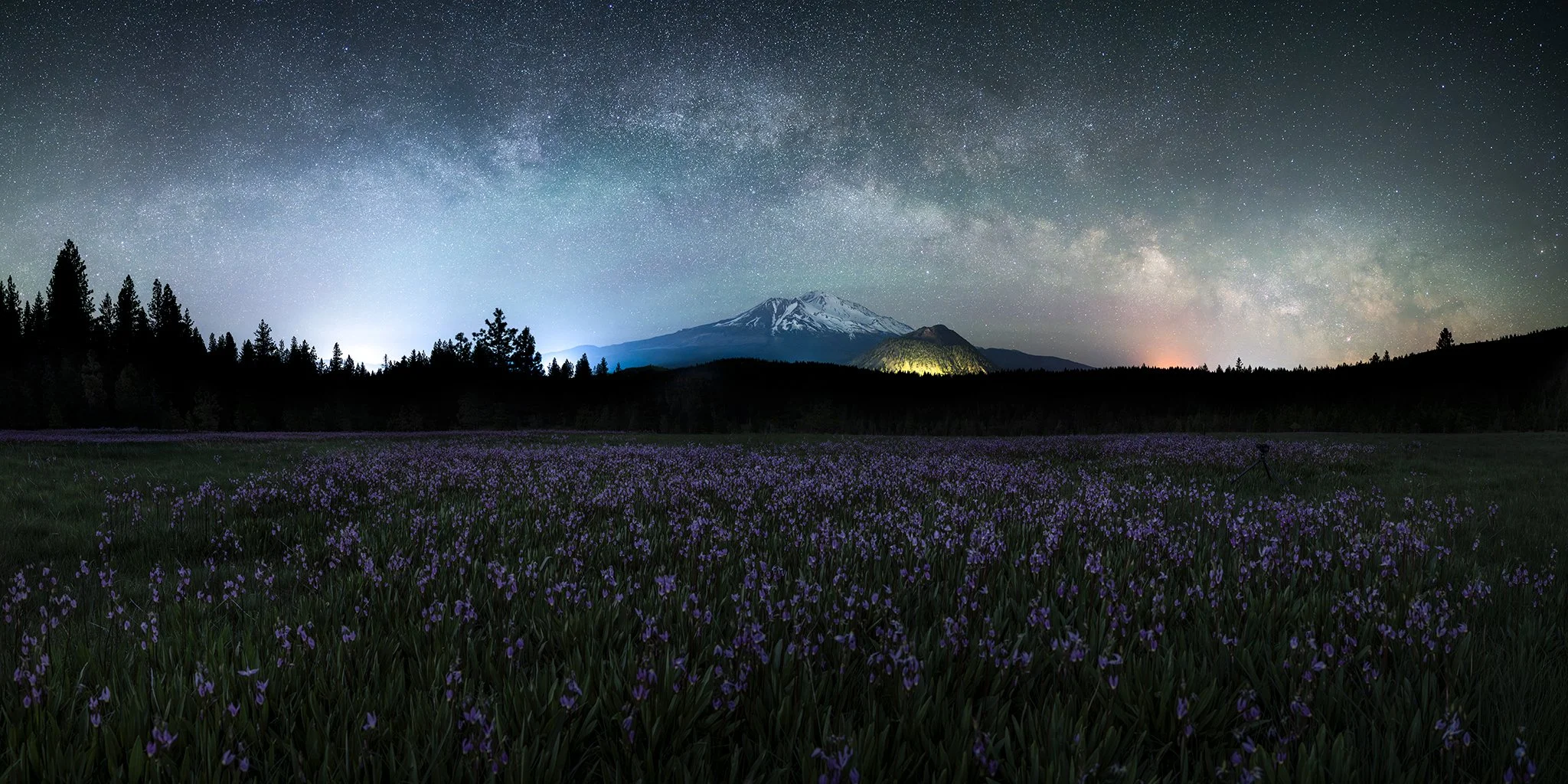
The Milky Way rises over Mt. Shasta and a field of Shooting Star flowers.

Left: The town of Weed glows brightly. Center: Black Butte is illuminated by the lights of Truck Village. Right, the orange glow of a fire and the lights of Mount Shasta City.

Understanding Sky Darkness: The Bortle Scale

To put things in context, it helps to understand how astronomers and astrophotographers talk about sky quality. The standard reference is the Bortle Scale, a nine-level numeric system developed by amateur astronomer John Bortle in 2001. At one end of the scale sits Class 1: the rarest, most pristine darkness found only in the most remote corners of the Earth, where the Milky Way casts an almost visible shadow and the sky glows faintly with natural airglow. At the other end is Class 9: the washed-out luminous haze of an inner-city sky, where only the Moon and the brightest planets manage to pierce the glow.
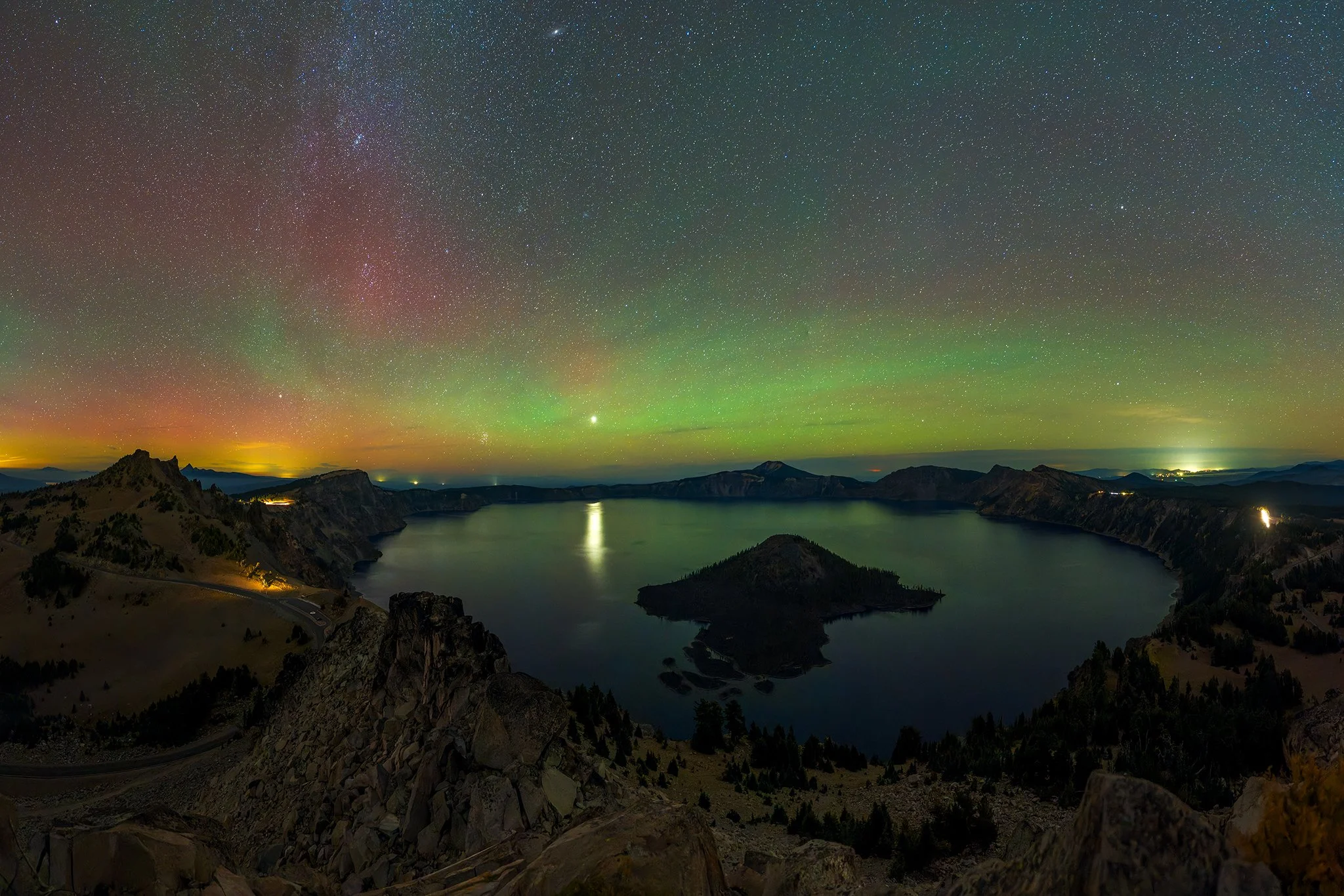
Crater Lake panorama from the top of The Watchman during intense airglow and faint aurora. The city of Bend on the left and Klamath Falls on the right notably visible on the distant horizon.

A lot of us live and shoot somewhere in between. Increasingly, even those of us who venture deep into rural lands are finding that "in between" is creeping in a troubling direction. For reference, a list of remaining Bortle Class 1 state and national parks in the US can be found here: https://www.go-astronomy.com/bortle-class-1-sky-sites.php
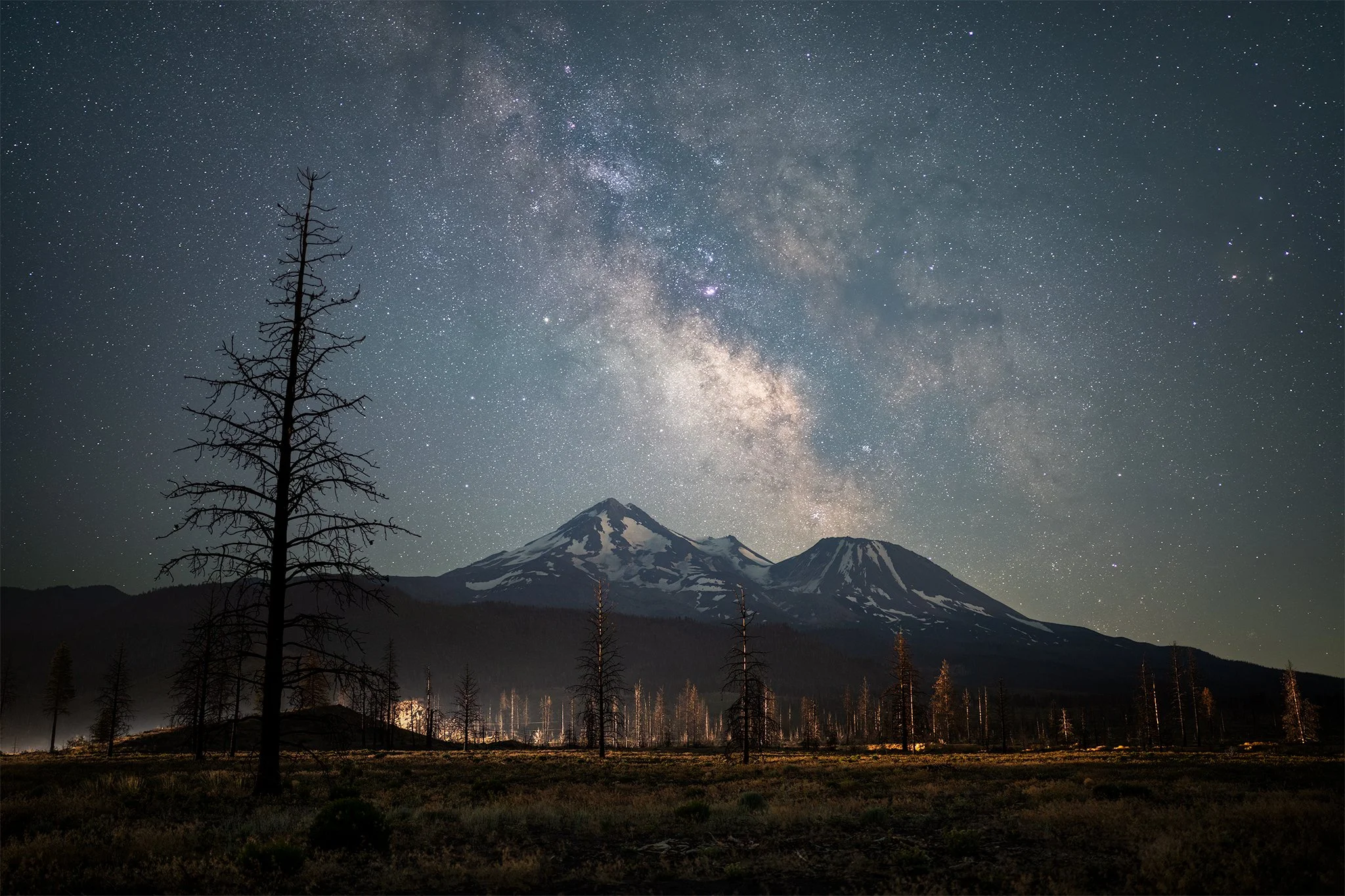
The Milky Way over Mt. Shasta on a slightly hazy summer night as a coming train illuminates the midground.

A Vanishing Darkness

I've been fortunate. Much of my life has been spent under genuinely dark skies, Bortle 2 and 3 conditions, and I've made it to Bortle 1 locations more than a few times.

One of my earliest and most vivid memories of true darkness comes from Copco Lake, California, a small, tucked-away community nestled between steep canyon walls in Siskiyou County, near the Oregon border. My grandfather lived there when I was young. At the time, the community was home to perhaps a hundred people at most and probably even less today. There were no street lights, no LED garden path lights, none of the ambient glow we've come to accept as a permanent feature of the nighttime landscape. It was dark in the way that only truly remote places can be: profoundly, completely, almost disorienting dark. I can still picture the Milky Way arching overhead on clear summer nights, dense, layered, almost three-dimensional in its richness. It's a sky I rarely encounter anymore, and one that stays with you forever once you see it.
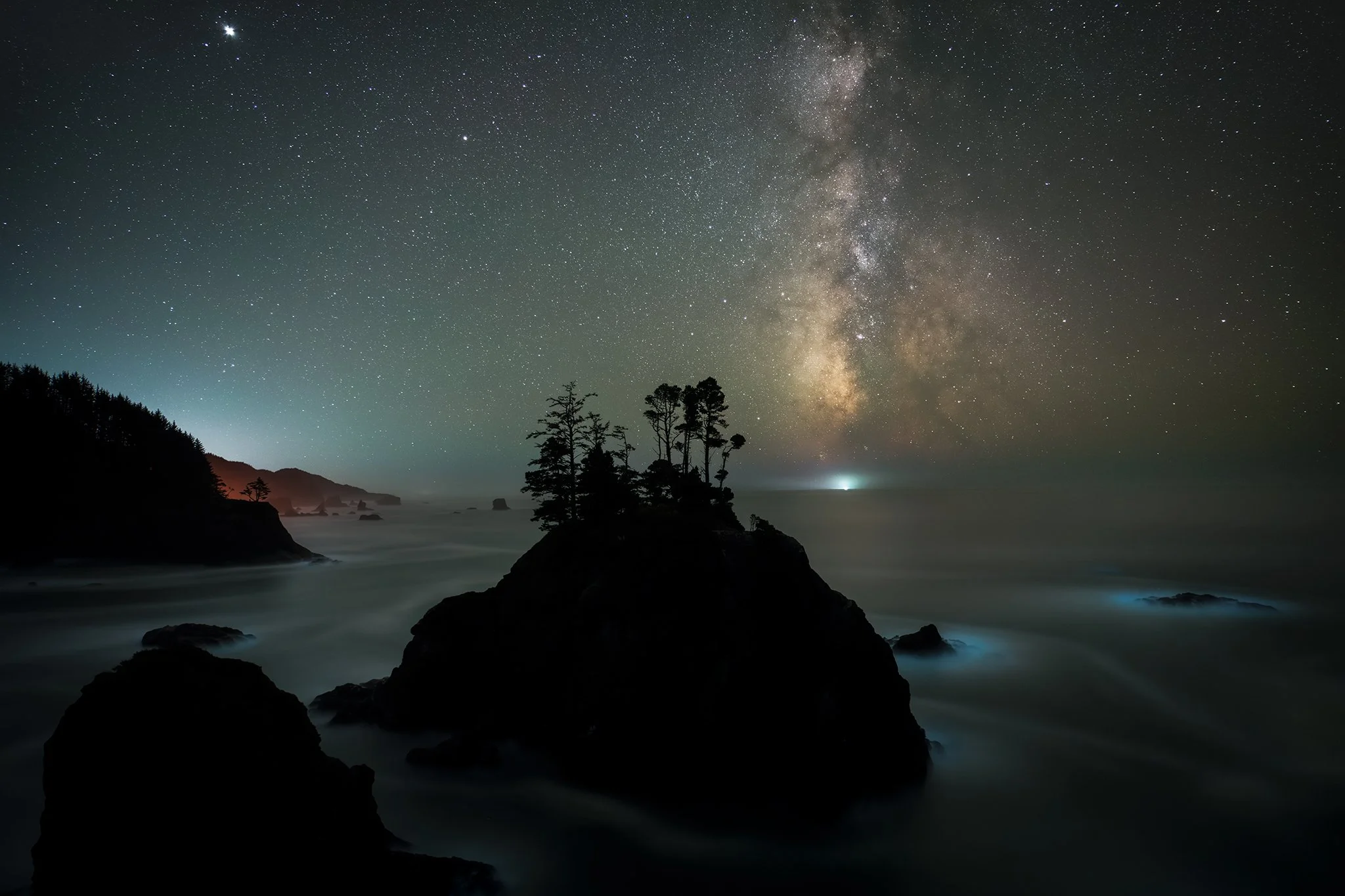
September night sky over the Southern Oregon Coast as the town of Brookings glows on the left, bioluminescence on the right, and a distant fishing vessel beneath the Milky Way on the horizon.

That quality of darkness is becoming harder and harder to find, even in regions that, until recently, were reliably rural and dim. Siskiyou County, where I still spend a great deal of time photographing, has grown noticeably brighter over just the past few years. The culprit, in large part, is a familiar one: the widespread replacement of older high-pressure sodium street lights with modern LED fixtures. The sodium lights had a certain photographic grace. Their warm amber-orange glow was relatively dim, directional, and narrow in spectrum. The new LEDs are a different matter entirely. They're dramatically brighter, broad-spectrum, and their light seems to scatter in every direction rather than focus downward. The result is a diffuse, cool-white haze that contaminates the sky in ways the old lights simply didn't. Add in the relentless blaze of LED gas station sign boards, piercing through the night with the subtlety of a floodlight, and you begin to understand how quickly things are changing.
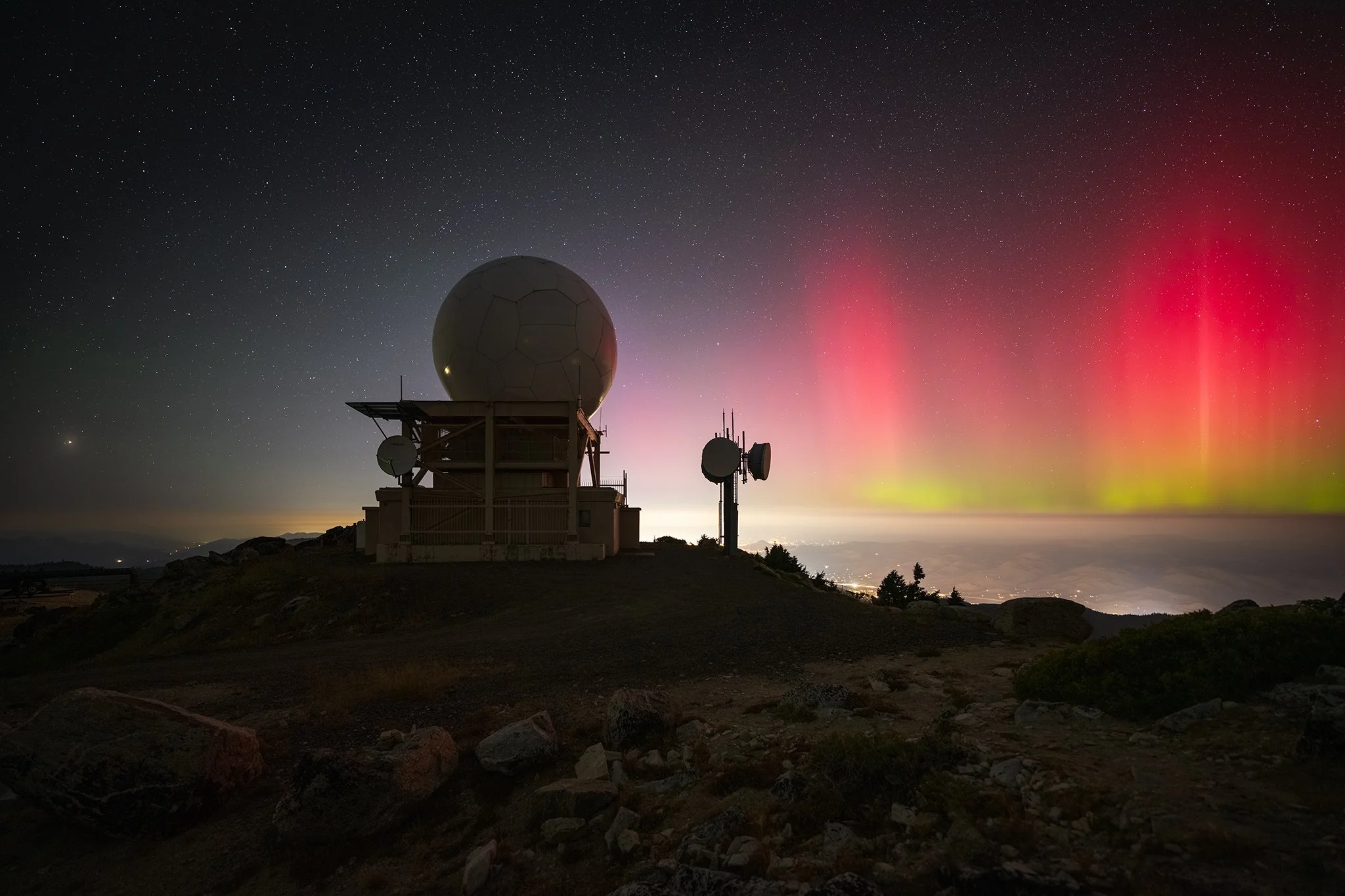
Northern Lights dance above an inversion layer of wildfire smoke and light haze from the Rogue Valley below.

The broader trend is not unique to Siskiyou County. One of the annual workshops I teach focuses specifically on capturing the Milky Way over Mt. Shasta, a subject I've devoted many nights to over the years. Locations I photographed from just a few years ago are measurably brighter now. Some of them, frankly, are no longer usable for serious night photography at all. I find myself driving farther, scouting more carefully, and adjusting my compositions to work around light infiltration that simply weren't there before.
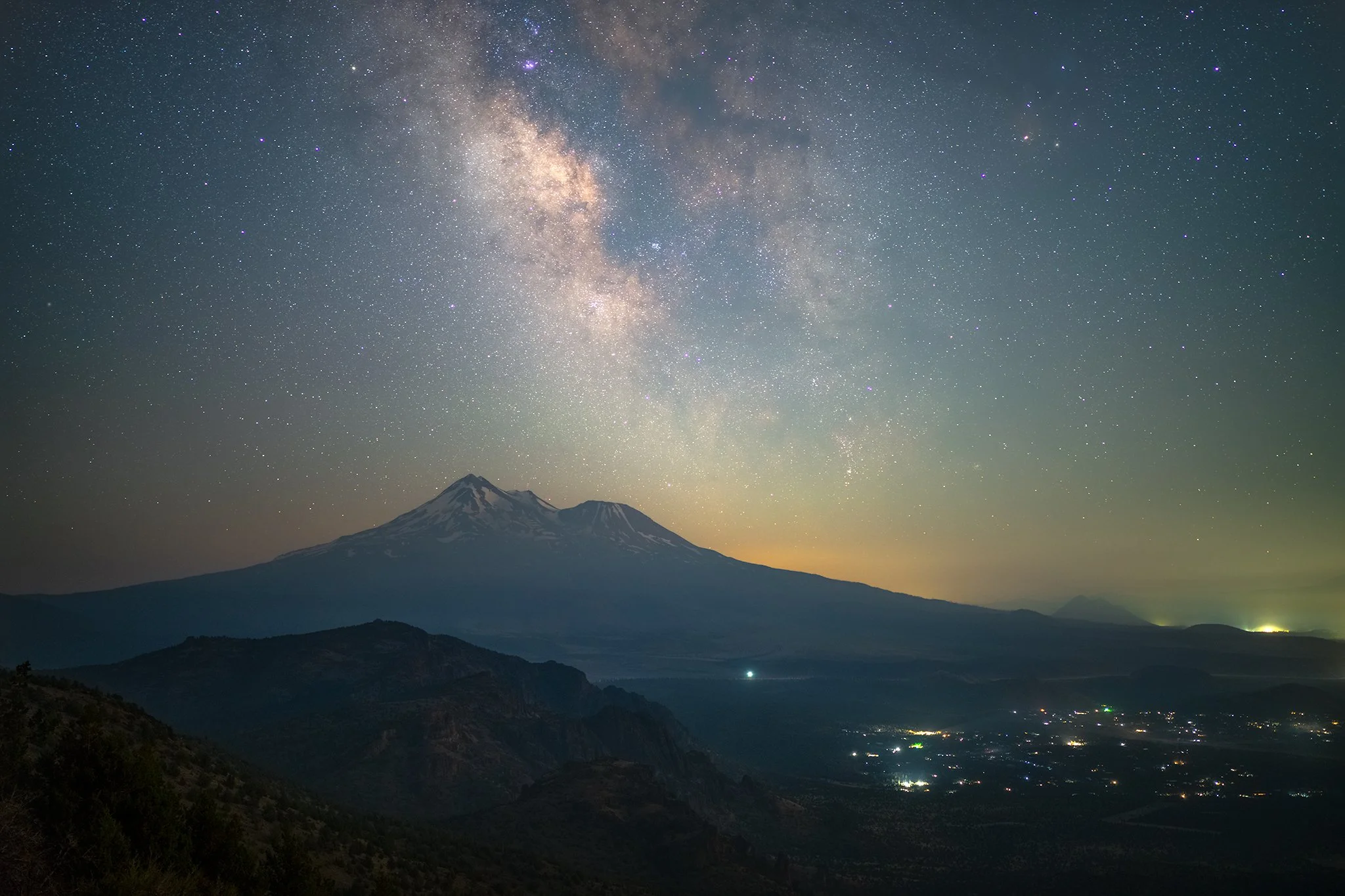
The Milky Way over Mt. Shasta on a hazy summer night with light pollution all around.

Non-photographers may not notice these changes at all. But with modern camera sensors, increasingly sensitive to wavelengths the human eye barely registers, even the faintest ambient light can render on a long exposure as a vivid, sweeping glow across the horizon.
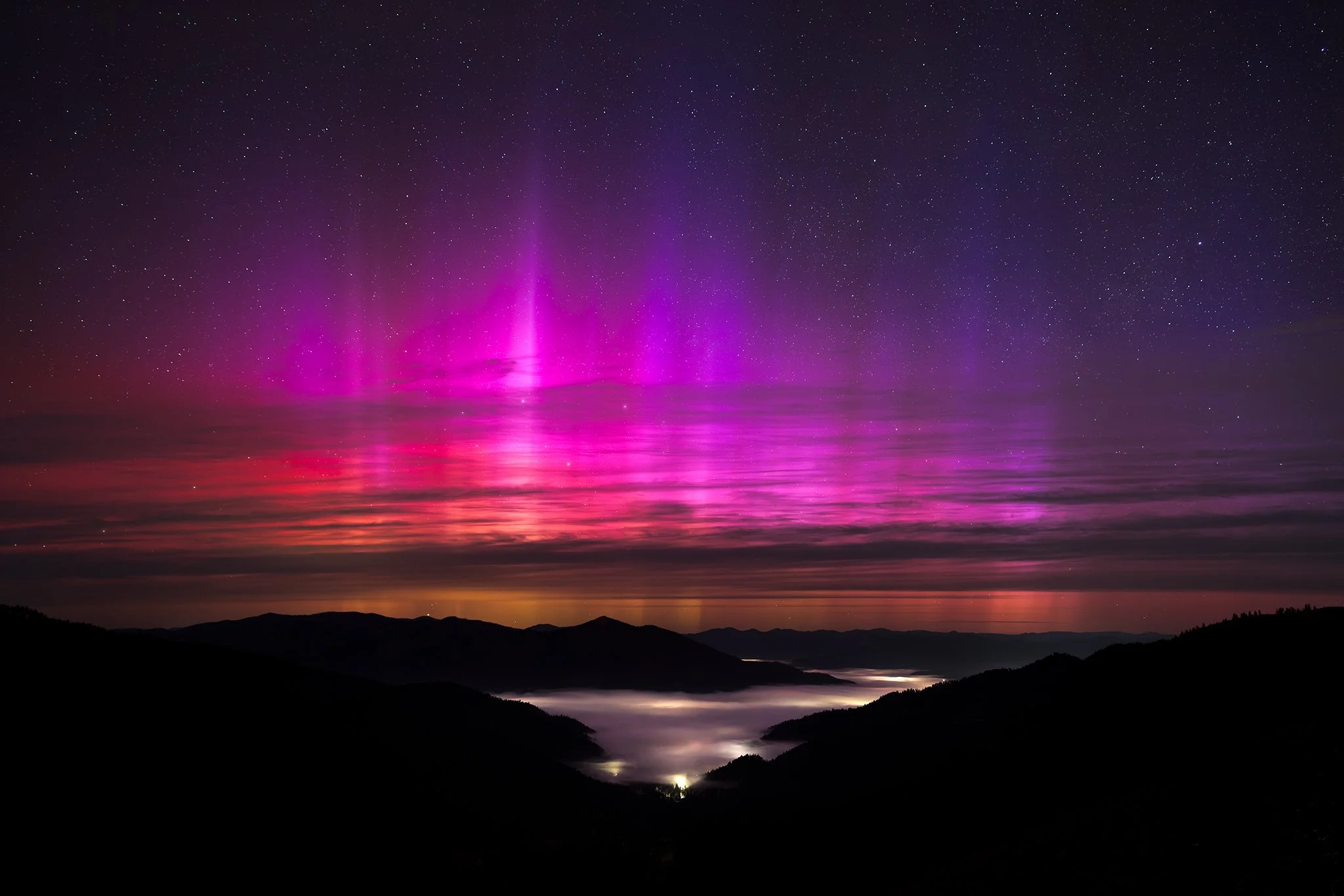
Northern Lights fill the sky over a fog inversion and the town of Rogue River, Oregon.

Embracing Imperfection

But here's where I want to shift gears, because this isn't meant to be an elegy. It's meant to be an invitation.

Yes, the skies are changing. Yes, the darkness we once took for granted is retreating. Those are real losses worth documenting and discussing. But dwelling only on what's gone risks something equally damaging: paralysis. The belief that if conditions aren't perfect, the image isn't worth making.
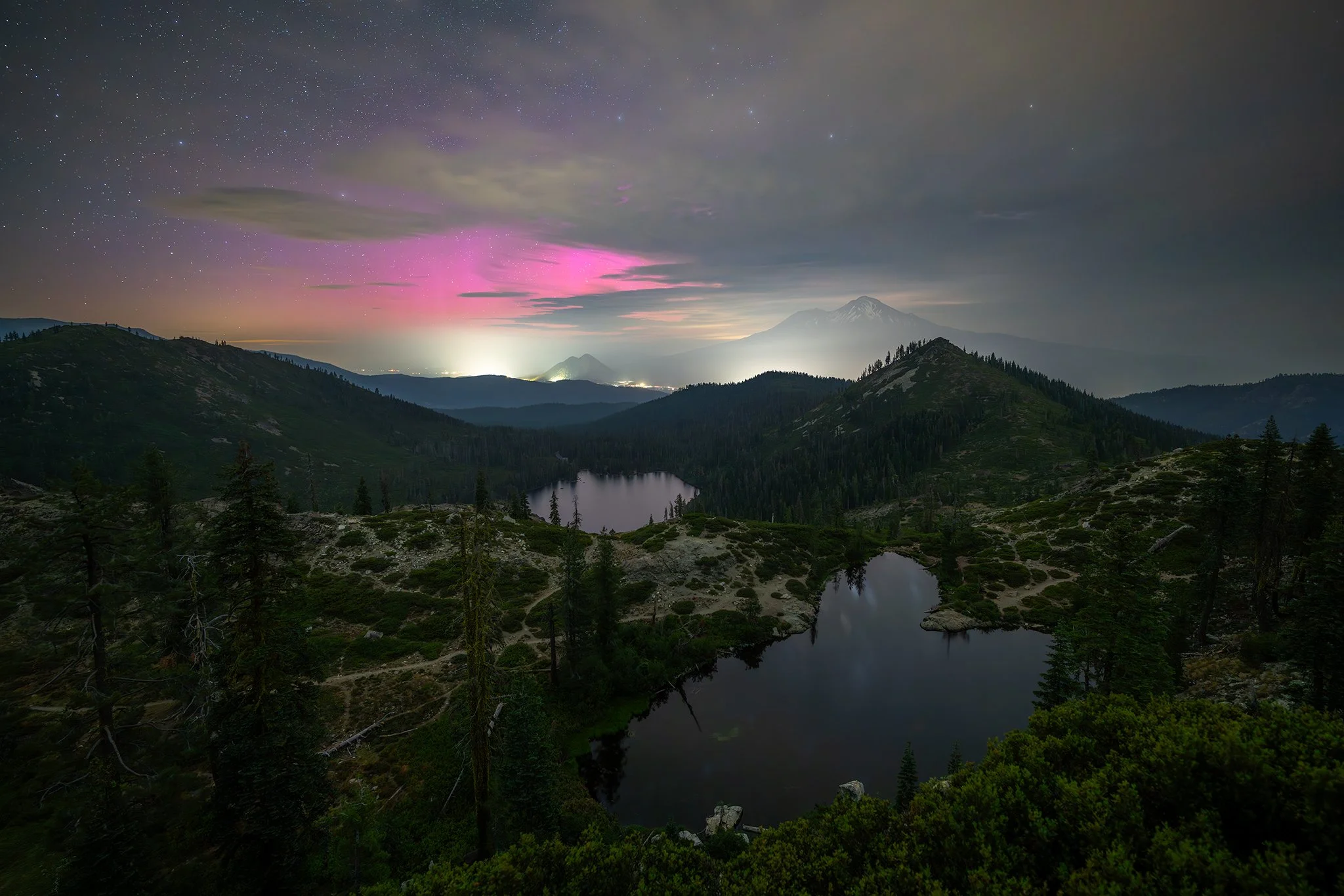
Wildfire smoke haze, clouds, and the distant glow of the aurora mix with the lights of Weed and Mount Shasta City. Heart Lake and Castle Lake in the foreground.

Light pollution, like weather, like haze, is simply another condition to work with, not necessarily a reason to pack up and go home. A distant city glow warming the horizon can anchor a composition. A gradient of amber or blue can give a photograph atmosphere and a sense of place that a perfectly "clean" sky sometimes lacks. Context and imperfection can be powerful tools when you stop fighting them and start working with them.
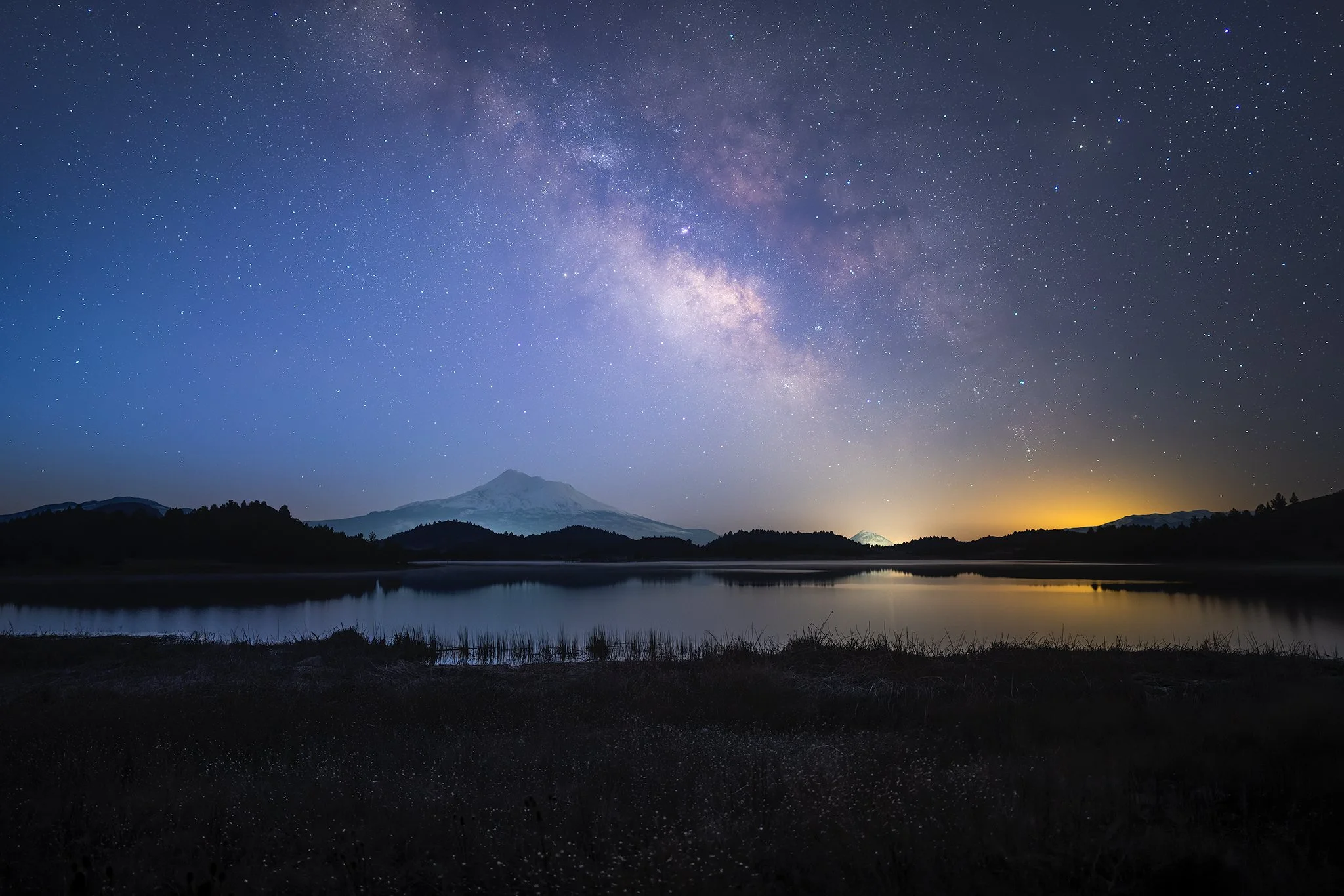
Dawn light and the Milky Way over Mt. Shasta as the city of Redding glows brightly 100 miles to the South,

The images I've included here were all made under compromised skies. None of them came from a Bortle 1 location. Some were shot within sight of small-town light domes; others within range of agricultural and highway lighting or fishing vessels. All of them, I think, were worth making. Some of them are among the images I'm most glad I didn't talk myself out of.

So get out and shoot. Find the inspiration. Document the sky as it is now. Push your equipment and your creative eye to find the image within the imperfection. Because the night sky, even a compromised one, is still extraordinary. And the photograph you don't take is the one you'll never have.
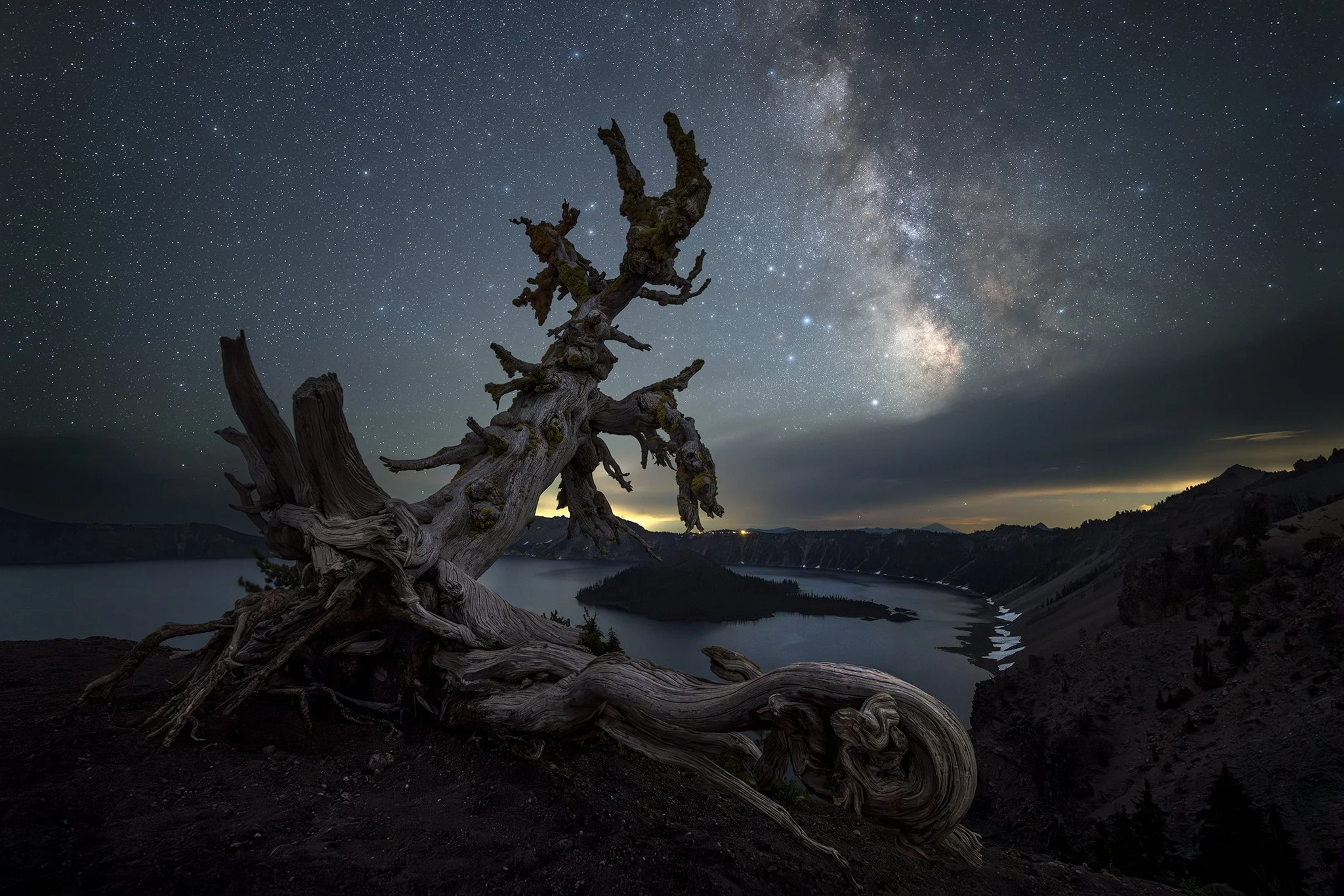
“The Sentinel” at Crater Lake National Park as Klamath Falls and Medford glow on either side of the Milky Way.

Yosemite in February

I recently returned home from spending a week in Yosemite National Park. This was my first time to the valley floor in approximately 15 years and it was great to be reacquainted with this beautiful location. Myself and a local photographer friend Matthew Newman shared the expenses of the trip and headed to Yosemite together. Matt had made tent-cabin reservations sometime prior (reservations are required to enter the park this time of year) to correspond with an annual phenomenon that only occurs two weeks of the year in February when conditions are right. It's called "Firefall." What happens is the setting sun perfectly aligns with Horsetail Falls on the eastern edge of El Capitan and casts a narrow sliver of light through the delicate falls causing it to illuminate in vivid color for just a few minutes before the sun drops below the horizon. Finding an optimal viewpoint to capture this event can be tricky as some elevation gain is ideal compared to being on the valley floor and having as much of a side view as possible helps amplify the perceived glow through the falls. Arriving in the park around noon we had plenty of time to study Google Earth, trail maps, and make a plan before sunset.

While making lunch near the car I made my first image of the trip. A 600mm black and white telephoto shot of Upper Yosemite Falls:

Upper Yosemite Falls  B&W Telephoto - February 2023

I love the almost abstract look of this scene and the contrasting textures between the falling water and the granite stone. Black and white just felt right for this image. Later I would find out we arrived on Ansel Adams 121st birthday by sheer coincidence.

After lunch we prepped our equipment and began hiking west towards the trailhead. Most of the valley, especially on the south side where we were is in shadow this time of year. Fresh snow hadn't yet fallen on this trip and the snow that was on the trail had been packed down, thawed, and refrozen into slick ice. Each of our camera packs loaded with equipment, water, and a few snacks weighed in at nearly 40 pounds. Matt even had 3 tripods along for this trek. With the use of ice crampons on our boots we were able to begin our upward ascent. After hiking uphill for about a mile we broke away from the trail and began sidehilling westward through the forest over snow and rock on a steep slope trying to reach a large boulder wash we had found using Google Earth. This would give us the best chance for a view as everywhere else was blocked by trees. After about 30 minutes of navigating the steep rocky snow covered terrain we reached the wash and climbed up on some rocks where we got our first view of Horsetail Falls. This spot would work.

Cellphone picture of our shooting location in the boulder wash as we waited and hoped for the Firefall. To the right of Matt's tripods is a vertical drop of about 30 feet. In the distance you can see El Capitan and Horsetail Falls beginning to catch light.

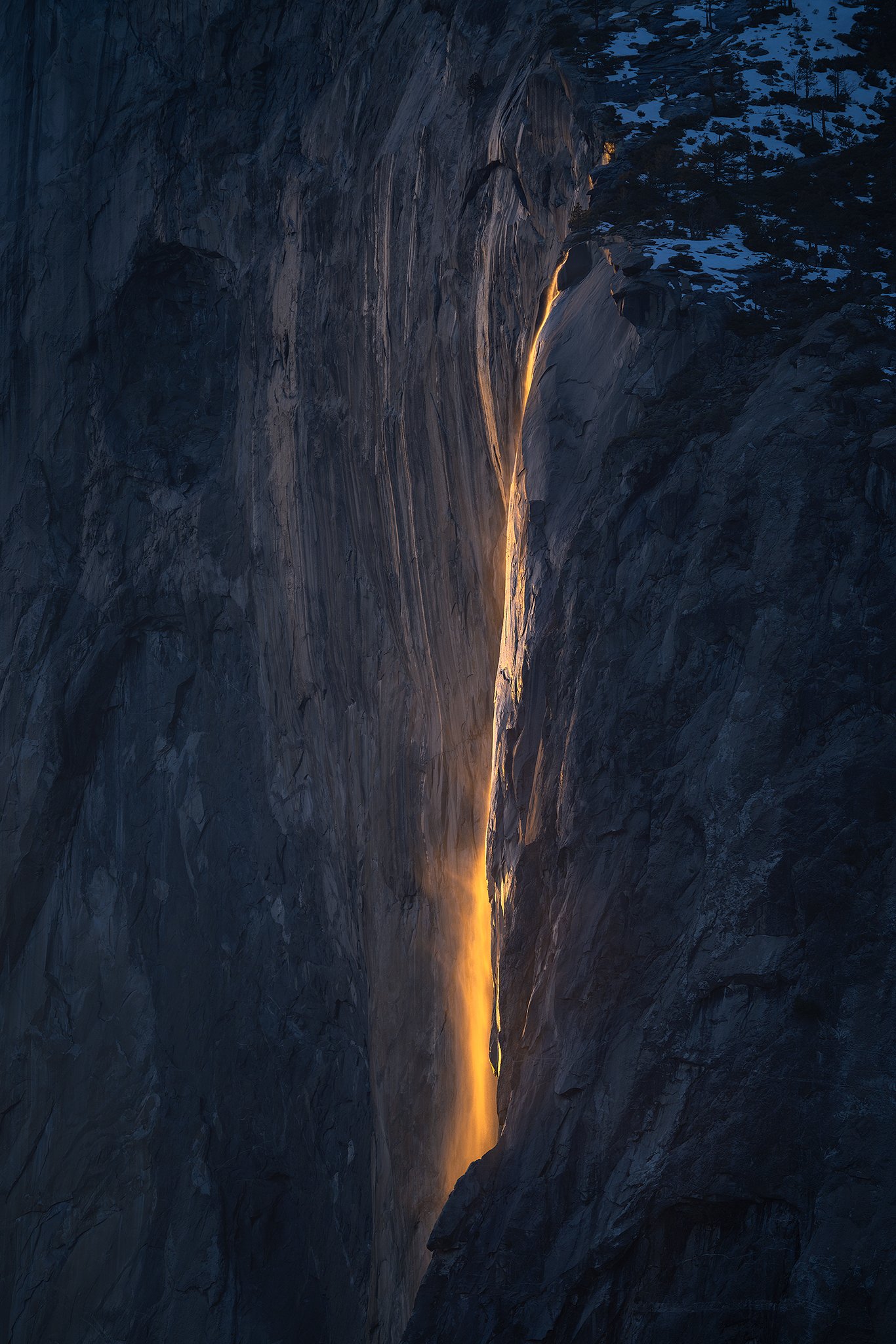
Now it was just a waiting game and high hopes that the right conditions would fall into place and produce the Firefall. After about another hour and a couple hand warmers later that narrow sliver of light we had hoped for began to shine on the falls and intensify in color. The conditions were perfect and this image was made in the last 60 seconds of sunlight as it skimmed across and through the falls:

Yosemite Firefall - February 2023

The tighter framing on this shot was something I had envisioned prior to leaving on the trip. Although the wider scene was certainly beautiful as well I chose to make the image more about the Firefall and the contrast between the warm sunlight in the water and the cooler tones of the cliff in shadow. Again, an almost abstract like quality. For a sense of scale, the falls is 8,000ft (1.52 miles) away from our shooting location. 


A significant snowstorm was expected to arrive mid morning the following day but studying the forecast there was a chance for clear skies to our east just prior to sunrise before clouds were expected to roll in. This time of year the Galactic Center of the Milky Way is just beginning to make its appearance in the night sky for the season. The way Yosemite Valley is oriented you aren't able to see the main core of the Milky Way from the valley floor as it is just out view to the south blocked by the high cliffs, however a good portion of the Galactic Center region is still visible. With the chance of an astrophotography opportunity we decided to set an alarm for 4:00AM and peak out of the canvas cabin we were staying in. If we saw stars, we would go. If not, we'd sleep for another couple hours waking for sunrise instead. The alarm went off, I stuck my head outside and looked upward to a dark sky full of stars. With that we turned on our headlamps and began suiting up for the 19 degree morning.

We arrived at the Yosemite Valley View viewpoint along the Merced River around 4:40AM and quickly began setting up our compositions as the window of time to capture the Milky Way before the light of dawn fades the stars and night sky to blue is very short in February. I use several special techniques to capture as much available light and image quality as possible in the darkness. Each technique requires more time than a simple single exposure. Thankfully I was able to capture my sky images in complete darkness but as I began my nearly 6 minute long single exposure for shadow detail a car drove by on Southside Drive effectively ruining that exposure. I started a second exposure and about halfway through another car pulled up and parked a short distance from us leaving their headlights on. Again, another wrecked imaged. Once they turned off their lights I started a third long exposure. This time the person who parked the car nearby came walking right up to us with a bright headlamp. Despite us asking him to turn off his light he didn't until Matt had a brief conversation with him. Maybe he had assumed we were just setting up for sunrise and he was completely ignorant to the concept of night photography. We will never know. At this point we were rapidly running out of night but with our new friend now enlightened to our need for darkness I was able to squeeze in one last and successful long exposure necessary for the shadow detail and this image is the final result:

Yosemite Valley Milky Way - February 2023

With a successful night shoot in the bag we headed towards Tunnel View. Once there we put on our crampons and began climbing the icy trail in twilight towards Artist Point. While hiking the trail we noticed clouds blowing in and obstructing the brighter planets, the only sources of light now left in the dawn sky. We couldn't believe our luck. We had just been shooting stars in a clear sky less than an hour earlier and now it looked like we might get a colorful sunrise too. We pressed on, hiking as quickly as possible trying to reach a vantage point clear of the trees. After about a mile of steep ascent loaded down with gear we finally reached a break in the trees in time for sunrise. I leveled my tripod and setup for a panorama. 10 minutes later this image was made:

Yosemite Valley Sunrise Panorama - February 2023

If you compare the rock features from this shot to the night sky image above you'll see this is looking the same direction. Taken just 90 minutes apart, I still can't believe the luck and difference in conditions.

After the sunrise shoot we headed back to our canvas tent/cabin at Curry Village for breakfast, showers, and a mid morning nap. Around 12pm we were awakened by park staff explaining that we were being evacuated from Curry Village immediately due to inbound heavy snow and high winds expected to arrive in the valley around 3pm. The tent campground had been evacuated as well. The concern was that the snow and winds could bring down trees and crush tent campers and folks in the canvas tent/cabins like us. After hauling our belongings back to the car we now had to find a place to stay outside of the park. Thankfully we found the Cedar Lodge in El Portal along Highway 140 just 30 minutes outside of the park. They offered us a discount due to the misfortune of being displaced from the park and the hotel room ended up being less expensive than the tent/cabin in Curry Village and a lot warmer I might add. Having electricity was also a nice treat for charging batteries, etc.

The next morning we arrived in the park after sunrise as we didn't expect any color due to the cloud cover. We were greeted with a fresh coat of snow and small breaks in the clouds allowing for dappled light to drift across the cliffs. Yosemite Valley View was one of the closest viewpoints so naturally we went there first. Standing on a snow covered log to gain a little elevation and carefully balancing my tripod I was able to capture this panorama:

Yosemite Valley View Winter Morning Panorama - February 2023

Shooting on an already high megapixel camera when these panorama images are stitched together the resolution and image quality is stunning. This particular panorama ended up being a 62X31 inch file at full 300PPI resolution. That's essentially the base file or starting point. In terms of print enlargements my general rule is that you can easily double and often times triple your base file size while still maintaining impeccable details and quality. Under those parameters an image like the one above has the potential to print up to 186 inches wide (or 15.5 feet) while still maintaining fine art quality resolution even when viewed up close. Making the highest quality most lifelike prints possible is very satisfying for me. Of course smaller sizes are available too!

As the day went on we drove lap after lap around the park in ever changing conditions, periodically making short hikes at various viewpoints and many more images were made. Around 2pm we happened upon a coyote hunting gofers in the El Capitan Meadow. I switched to my 200-600mm lens and began watching and photographing the coyote. It wandered closer as it zigzagged back and forth, eventually after a short pause and some careful listening it made it's pounce on an unsuspecting vole. I was fortunate enough to capture these images:

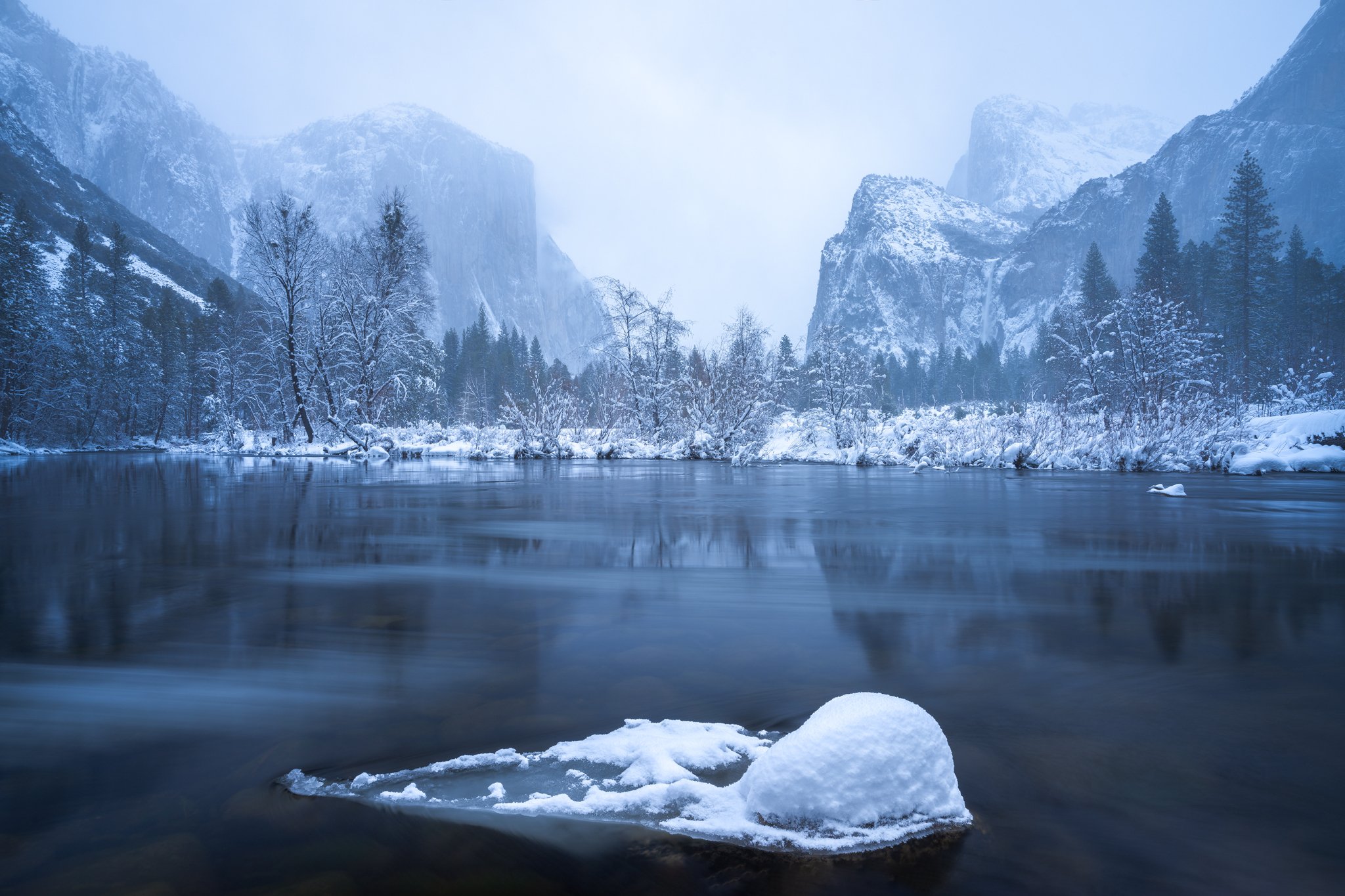
After the midday coyote shoot the snow began falling again and we revisited Yosemite Valley View again. I put on some hip waders and ventured out into the Merced River to get a little closer to some foreground elements and came away with this image:

Yosemite Valley and the Merced River in Winter.

As I stood thigh deep in the water, moderate sized pieces of slush drifted downstream around my legs and through my tripod. It was a great experience. There’s something special about standing in water to capture an image and during winter that feeling is amplified.

Later that day the snowfall began to intensify and on our final lap around the valley we stumbled upon another coyote (or maybe the same one) and although the light had mostly gone and the snowfall was now nearing blizzard conditions I attempted to make some images. Most were blurry due to the slow shutter speed in low light while handholding the camera but the few that turned out were pure magic in the wet heavy snow.

A Yosemite Valley Coyote hunting voles in twilight as snow begins to fall.

After walking along the path following the movements of the coyote as much as we could we headed back to the car as the snow intensified and the remaining light faded away. This would be our last shoot of the trip and Yosemite National Park would close two days later due to heavy snow accumulation.

Yosemite Valley blizzard conditions.

The variety of images we were able to capture on this brief trip was fantastic and I hope to revisit this spectacular place again next winter.